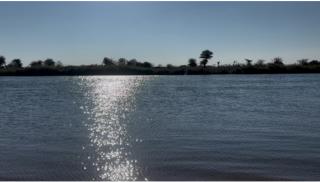
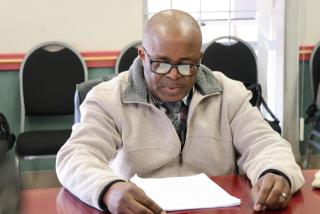
OTJIMBINGWE, 23 May 2026 - Senior Headman and Traditional Leader within the Ovaherero Traditional Authority, Chief Jeremiah Janee Mujahere of Otjimbingwe narrates history of the 1904-1908 Genocide in the Otjimbingwe Settlement. (Photo by: Isabel Bento) NAMPA
WINDHOEK, 25 February 2025 - Mbiripipo Joyce Muzengua, Deputy Chairperson of the Ovaherero Genocide Foundation and Human Rights Desk leader for the Landless Peoples’ Movement (LPM). (Photo: Contributed) NAMPA.
OPUWO, 26 May 2026 - Moks Tuaekoveni Kenaumue, Kunene Regional Youth Forum chairperson, Swapo Party Youth League Kunene regional secretary and Opuwo Town Council councillor, speaking ahead of the Genocide Remembrance Day commemoration set for 28 May 2026 in Opuwo. (Photo: Contributed)
WINDHOEK, 26 May 2026 - Chamber of Mines President, George Botshiwe. (Photo: Contributed)
WINDHOEK, 25 May 2026 - MTC Corporate Communications Practitioner, Erasmus Nekundi. (Photo: Contributed)
WINDHOEK, 23 May 2024 - Military outfit Mighty Gunners celebrating their firstever Standard Bank Top 8 title which they secured after a thrilling 2-1 victory over UNAM FC at the Independence Stadium. (Photo by: Hesron Kapanga) NAMPA
(FILES) Senegal's President Abdoulaye Wade talks during a joint press conference with Italian Prime Minister Romano Prodi (not pictured) prior to their meeting in Rome's Palazzo Chigi, 06 December 2007. Born on May 29, 1926, the son of a trader, Abdoulaye Wade won a scholarship to study in France, attending the Lycee Condorcet in Paris before continuing his education in Besanзon where he met his future French wife, Viviane Vert. They had two children, Karim and Sindiely. Trained in law, economics and applied mathematics, Wade returned to Senegal in 1960, the year of independence. He taught law before opening a legal practice. In 1974, during the single party rule of Lйopold Sйdar Senghor, he obtained authorization to found the Senegalese Democratic Party (PDS). Under President Abdou Diouf, Wade was arrested and jailed several times. A powerful speaker, he became the country’s leading opposition figure, earning the nickname “president of the street”. His election in 2000 ended 40 years of Socialist rule, first under Senghor and then Diouf, who conceded defeat reinforcing Senegal’s reputation as a democratic model in Africa. Wade was 74 when he finally won the presidency on his fifth attempt. Re elected in 2007 for a five year term, he later amended the constitution to restore a seven year mandate. His presidency saw major infrastructure projects, but he was criticized for failing to step aside peacefully at the end of his rule. Nicknamed “Gorgui” — meaning “the elder” in Wolof — Wade was praised by supporters as a builder and modernizer, and denounced by critics as authoritarian and prone to political illusion. (Photo by Filippo MONTEFORTE / AFP)
(FILES) French President Jacques Chirac (R) and Senegalese President Abdoulaye Wade waves in the streets of Saint Louis on the second day of his three-day visit in Senegal, 03 February 2005. Born on May 29, 1926, the son of a trader, Abdoulaye Wade won a scholarship to study in France, attending the Lycee Condorcet in Paris before continuing his education in Besanзon where he met his future French wife, Viviane Vert. They had two children, Karim and Sindiely. Trained in law, economics and applied mathematics, Wade returned to Senegal in 1960, the year of independence. He taught law before opening a legal practice. In 1974, during the single party rule of Lйopold Sйdar Senghor, he obtained authorization to found the Senegalese Democratic Party (PDS). Under President Abdou Diouf, Wade was arrested and jailed several times. A powerful speaker, he became the country’s leading opposition figure, earning the nickname “president of the street”. His election in 2000 ended 40 years of Socialist rule, first under Senghor and then Diouf, who conceded defeat reinforcing Senegal’s reputation as a democratic model in Africa. Wade was 74 when he finally won the presidency on his fifth attempt. Re elected in 2007 for a five year term, he later amended the constitution to restore a seven year mandate. His presidency saw major infrastructure projects, but he was criticized for failing to step aside peacefully at the end of his rule. Nicknamed “Gorgui” — meaning “the elder” in Wolof — Wade was praised by supporters as a builder and modernizer, and denounced by critics as authoritarian and prone to political illusion. (Photo by PATRICK KOVARIK / AFP)
(FILES) Senegalese president Abdoulaye Wade (L) welcomes his Brazilian counterpart Luis Inacio Lula da Silva upon arrival, at Dakar airport, 13 April 2005. Lula who is on a two-day visit to Senegal, finishes there his tour of African countries. Born on May 29, 1926, the son of a trader, Abdoulaye Wade won a scholarship to study in France, attending the Lycee Condorcet in Paris before continuing his education in Besanзon where he met his future French wife, Viviane Vert. They had two children, Karim and Sindiely. Trained in law, economics and applied mathematics, Wade returned to Senegal in 1960, the year of independence. He taught law before opening a legal practice. In 1974, during the single party rule of Lйopold Sйdar Senghor, he obtained authorization to found the Senegalese Democratic Party (PDS). Under President Abdou Diouf, Wade was arrested and jailed several times. A powerful speaker, he became the country’s leading opposition figure, earning the nickname “president of the street”. His election in 2000 ended 40 years of Socialist rule, first under Senghor and then Diouf, who conceded defeat reinforcing Senegal’s reputation as a democratic model in Africa. Wade was 74 when he finally won the presidency on his fifth attempt. Re elected in 2007 for a five year term, he later amended the constitution to restore a seven year mandate. His presidency saw major infrastructure projects, but he was criticized for failing to step aside peacefully at the end of his rule. Nicknamed “Gorgui” — meaning “the elder” in Wolof — Wade was praised by supporters as a builder and modernizer, and denounced by critics as authoritarian and prone to political illusion. (Photo by SEYLLOU / AFP)
(FILES) Algeria's President Abdelaziz Bouteflika (R) escorts his Senegalese counterpart Abdoulaye Wade upon their meeting at Houari Boumediene International airport in Algiers City 24 January 2007. Born on May 29, 1926, the son of a trader, Abdoulaye Wade won a scholarship to study in France, attending the Lycee Condorcet in Paris before continuing his education in Besanзon where he met his future French wife, Viviane Vert. They had two children, Karim and Sindiely. Trained in law, economics and applied mathematics, Wade returned to Senegal in 1960, the year of independence. He taught law before opening a legal practice. In 1974, during the single party rule of Lйopold Sйdar Senghor, he obtained authorization to found the Senegalese Democratic Party (PDS). Under President Abdou Diouf, Wade was arrested and jailed several times. A powerful speaker, he became the country’s leading opposition figure, earning the nickname “president of the street”. His election in 2000 ended 40 years of Socialist rule, first under Senghor and then Diouf, who conceded defeat reinforcing Senegal’s reputation as a democratic model in Africa. Wade was 74 when he finally won the presidency on his fifth attempt. Re elected in 2007 for a five year term, he later amended the constitution to restore a seven year mandate. His presidency saw major infrastructure projects, but he was criticized for failing to step aside peacefully at the end of his rule. Nicknamed “Gorgui” — meaning “the elder” in Wolof — Wade was praised by supporters as a builder and modernizer, and denounced by critics as authoritarian and prone to political illusion. (Photo by Fayez Nureldine / AFP)
(FILES) Senegal President Abdoulaye Wade (L) holds a joint press conference with Mustafa Abdul Jalil, the head of the Libyan rebels' National Transitional Council, following a meeting in the eastern city of Benghazi on June 9, 2011 where the former urged Libyan leader Moamer Kadhafi to step down, "the sooner the better". Born on May 29, 1926, the son of a trader, Abdoulaye Wade won a scholarship to study in France, attending the Lycee Condorcet in Paris before continuing his education in Besanзon where he met his future French wife, Viviane Vert. They had two children, Karim and Sindiely. Trained in law, economics and applied mathematics, Wade returned to Senegal in 1960, the year of independence. He taught law before opening a legal practice. In 1974, during the single party rule of Lйopold Sйdar Senghor, he obtained authorization to found the Senegalese Democratic Party (PDS). Under President Abdou Diouf, Wade was arrested and jailed several times. A powerful speaker, he became the country’s leading opposition figure, earning the nickname “president of the street”. His election in 2000 ended 40 years of Socialist rule, first under Senghor and then Diouf, who conceded defeat reinforcing Senegal’s reputation as a democratic model in Africa. Wade was 74 when he finally won the presidency on his fifth attempt. Re elected in 2007 for a five year term, he later amended the constitution to restore a seven year mandate. His presidency saw major infrastructure projects, but he was criticized for failing to step aside peacefully at the end of his rule. Nicknamed “Gorgui” — meaning “the elder” in Wolof — Wade was praised by supporters as a builder and modernizer, and denounced by critics as authoritarian and prone to political illusion. (Photo by GIANLUIGI GUERCIA / AFP)
(FILES) Ivory Coast President Alassane Ouattara (R) walks arm in arm with Sengal President Abdoulaye Wade (L) as he arrives at the airport in Dakar on May 12, 2011 on his first foreign trip since being sworn in last week. Born on May 29, 1926, the son of a trader, Abdoulaye Wade won a scholarship to study in France, attending the Lycee Condorcet in Paris before continuing his education in Besanзon where he met his future French wife, Viviane Vert. They had two children, Karim and Sindiely. Trained in law, economics and applied mathematics, Wade returned to Senegal in 1960, the year of independence. He taught law before opening a legal practice. In 1974, during the single party rule of Lйopold Sйdar Senghor, he obtained authorization to found the Senegalese Democratic Party (PDS). Under President Abdou Diouf, Wade was arrested and jailed several times. A powerful speaker, he became the country’s leading opposition figure, earning the nickname “president of the street”. His election in 2000 ended 40 years of Socialist rule, first under Senghor and then Diouf, who conceded defeat reinforcing Senegal’s reputation as a democratic model in Africa. Wade was 74 when he finally won the presidency on his fifth attempt. Re elected in 2007 for a five year term, he later amended the constitution to restore a seven year mandate. His presidency saw major infrastructure projects, but he was criticized for failing to step aside peacefully at the end of his rule. Nicknamed “Gorgui” — meaning “the elder” in Wolof — Wade was praised by supporters as a builder and modernizer, and denounced by critics as authoritarian and prone to political illusion. (Photo by SEYLLOU / AFP)
(FILES) Senegalese President and presidential candidate Abdoulaye Wade greets supporters on March 23, 2012 during an election campaign tour in Dakar. Born on May 29, 1926, the son of a trader, Abdoulaye Wade won a scholarship to study in France, attending the Lycee Condorcet in Paris before continuing his education in Besanзon where he met his future French wife, Viviane Vert. They had two children, Karim and Sindiely. Trained in law, economics and applied mathematics, Wade returned to Senegal in 1960, the year of independence. He taught law before opening a legal practice. In 1974, during the single party rule of Lйopold Sйdar Senghor, he obtained authorization to found the Senegalese Democratic Party (PDS). Under President Abdou Diouf, Wade was arrested and jailed several times. A powerful speaker, he became the country’s leading opposition figure, earning the nickname “president of the street”. His election in 2000 ended 40 years of Socialist rule, first under Senghor and then Diouf, who conceded defeat reinforcing Senegal’s reputation as a democratic model in Africa. Wade was 74 when he finally won the presidency on his fifth attempt. Re elected in 2007 for a five year term, he later amended the constitution to restore a seven year mandate. His presidency saw major infrastructure projects, but he was criticized for failing to step aside peacefully at the end of his rule. Nicknamed “Gorgui” — meaning “the elder” in Wolof — Wade was praised by supporters as a builder and modernizer, and denounced by critics as authoritarian and prone to political illusion. (Photo by Issouf SANOGO / AFP)
(FILES) France's President Nicolas Sarkozy (L) welcomes Senegalese President Abdoulaye Wade on July 13, 2010 at the Elysee Palace in Paris prior to a lunch with 13 African Presidents. Born on May 29, 1926, the son of a trader, Abdoulaye Wade won a scholarship to study in France, attending the Lycee Condorcet in Paris before continuing his education in Besanзon where he met his future French wife, Viviane Vert. They had two children, Karim and Sindiely. Trained in law, economics and applied mathematics, Wade returned to Senegal in 1960, the year of independence. He taught law before opening a legal practice. In 1974, during the single party rule of Lйopold Sйdar Senghor, he obtained authorization to found the Senegalese Democratic Party (PDS). Under President Abdou Diouf, Wade was arrested and jailed several times. A powerful speaker, he became the country’s leading opposition figure, earning the nickname “president of the street”. His election in 2000 ended 40 years of Socialist rule, first under Senghor and then Diouf, who conceded defeat reinforcing Senegal’s reputation as a democratic model in Africa. Wade was 74 when he finally won the presidency on his fifth attempt. Re elected in 2007 for a five year term, he later amended the constitution to restore a seven year mandate. His presidency saw major infrastructure projects, but he was criticized for failing to step aside peacefully at the end of his rule. Nicknamed “Gorgui” — meaning “the elder” in Wolof — Wade was praised by supporters as a builder and modernizer, and denounced by critics as authoritarian and prone to political illusion. (Photo by PHILIPPE WOJAZER / POOL / AFP)