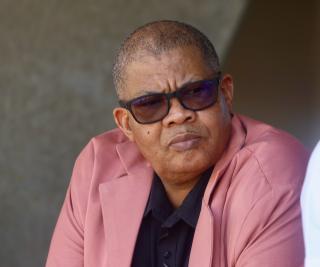
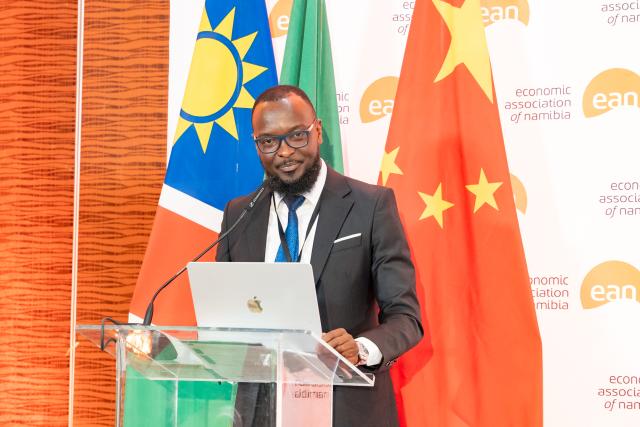
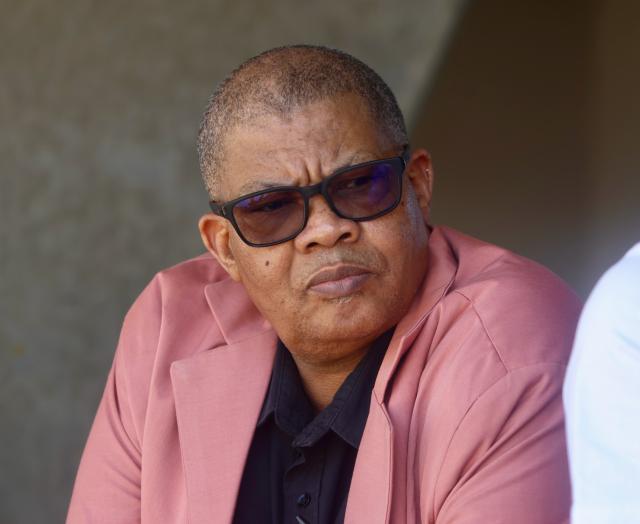
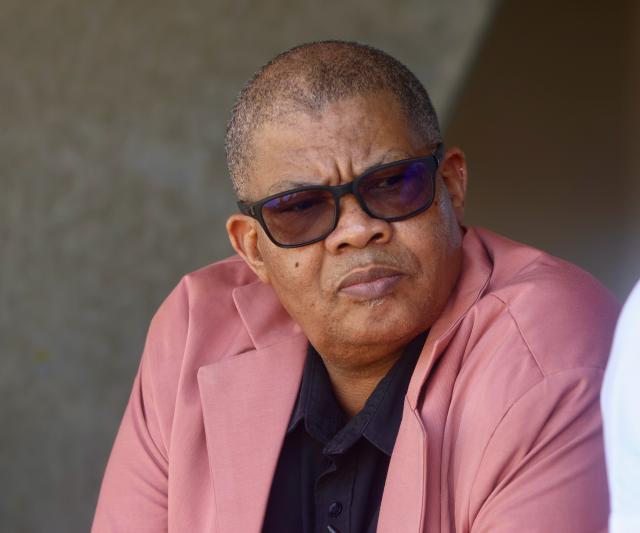
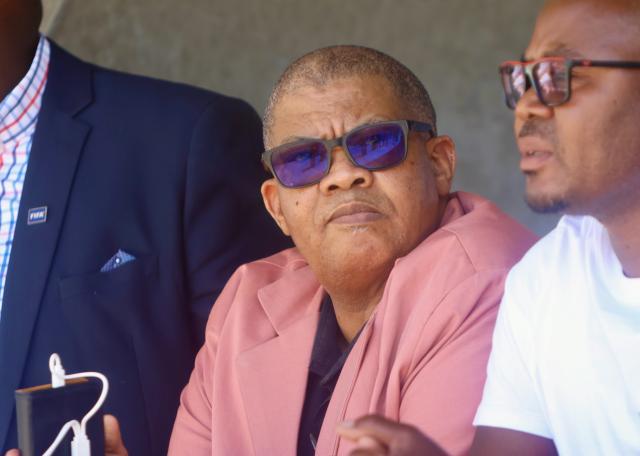
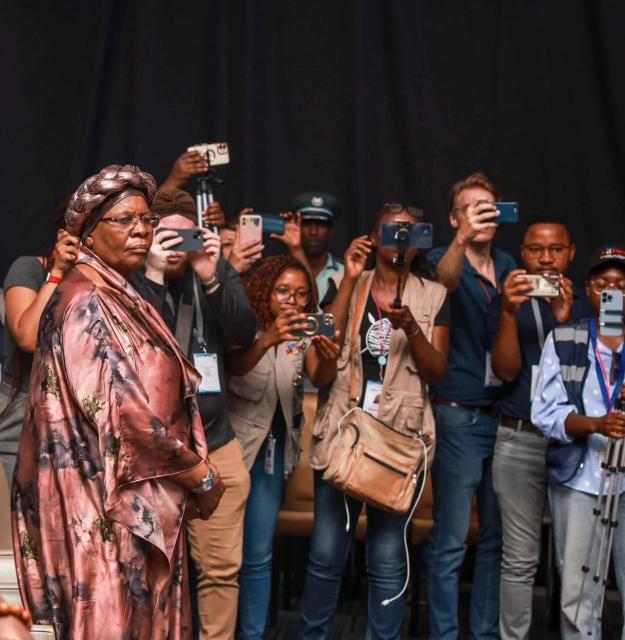
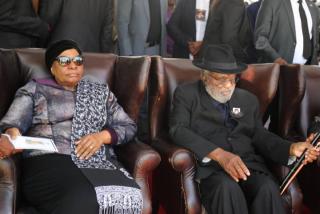
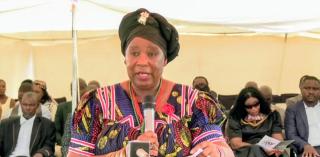
CAPE TOWN, 19 August 2026 - South Africa’s Minister of Sport, Arts and Culture, Gayton McKenzie speaking at Iziko Museum in Cape Town, South Africa during the handing over of remains of former Robben Island prisoners in partnership with the Namibian government. (Photo: Contributed)
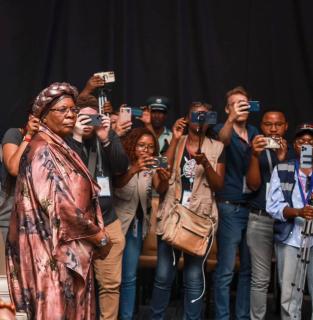
WINDHOEK, 19 August 2026 - Minister of Education, Innovation, Youth, Sports, Arts and Culture, Sanet Steenkamp speaking at the Iziko Museum in Cape Town, South Africa during the handing over of the remains of former Robben Island prisoners in partnership with the South African Department of Sport, Arts and Culture. (Photo: Contributed) NAMPA
OPUWO, 19 August 2026 - Members of the Parliamentary Standing Committee on Education, Youth, Civic Relations and Community Development during an oversight visit to assess the implementation of the Youth Development Fund and progress on basic sports facilities in the Kunene Region on Tuesday. (Photo by: Kaviveterue Virere) NAMPA
KATIMA MULILO, 19 August 2026 - The Zambezi Vocational Training Centre (ZVTC) on Wednesday received 300 pieces of Kiaat timber planks from the Ministry of Environment, Forestry and Tourism. (Photo: Contributed)
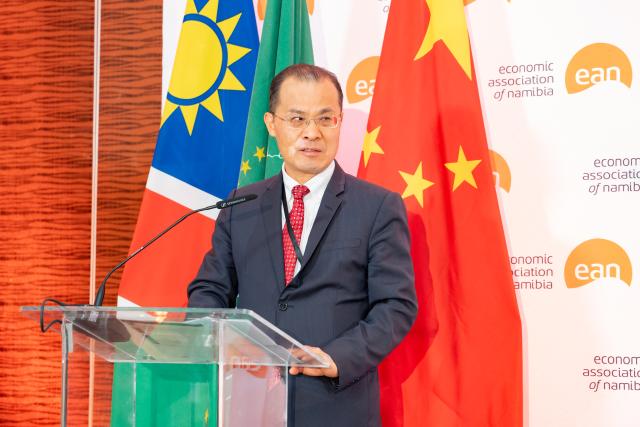
WINDHOEK, 19 August 2026 - Travis Smithard, CEO of Rhino Resources, at the official opening of the fourth edition of the Namibia Oil and Gas Conference. (Photo by: Justina Shuumbwa) NAMPA
WINDHOEK, 19 August 2026 - Vice President Lucia Witbooi, at the official opening of the fourth edition of the Namibia Oil and Gas Conference. (Photo by: Justina Shuumbwa) NAMPA
steenkamp
WINDHOEK, 19 August 2026 - Minister of Industries, Mines and Energy Modestus Amutse. (Photo by: Justina Shuumbwa) NAMPA
Eric Adotey Kpakpo, 49, also known as Erico, owner of the Erico Carpentry Shop, poses for a photograph next to a mobile phone-shaped coffin in Accra, on August 17, 2026. Fantasy coffins are a distinctive Ghanaian funerary tradition, particularly associated with the Ga people of the Greater Accra region. Known locally as abebuu adekai (“proverb boxes”), they are handcrafted in the shape of objects, animals or vehicles reflecting the deceased’s profession, personality or interests — from a fish for a fisherman to a shoe for a footballer. Developed around Accra in the mid-20th century, the tradition has evolved into a highly skilled craft. The practice reflects a Ghanaian approach to funerals in which mourning can coexist with celebration, symbolism and a strong emphasis on remembering the life and identity of the deceased. (Photo by OLYMPIA DE MAISMONT / AFP)
A car-shaped coffin, designed in reference to the profession of the deceased, a driver, is pictured at the Hello Design Coffin workshop in Accra, on August 17, 2026. Fantasy coffins are a distinctive Ghanaian funerary tradition, particularly associated with the Ga people of the Greater Accra region. Known locally as abebuu adekai (“proverb boxes”), they are handcrafted in the shape of objects, animals or vehicles reflecting the deceased’s profession, personality or interests — from a fish for a fisherman to a shoe for a footballer. Developed around Accra in the mid-20th century, the tradition has evolved into a highly skilled craft. The practice reflects a Ghanaian approach to funerals in which mourning can coexist with celebration, symbolism and a strong emphasis on remembering the life and identity of the deceased. (Photo by OLYMPIA DE MAISMONT / AFP)
Men carry a Coca-Cola bottle-shaped coffin, designed in reference to the deceased's fondness for the soft drink, at the Hello Design Coffin workshop in Accra, on August 17, 2026. Fantasy coffins are a distinctive Ghanaian funerary tradition, particularly associated with the Ga people of the Greater Accra region. Known locally as abebuu adekai (“proverb boxes”), they are handcrafted in the shape of objects, animals or vehicles reflecting the deceased’s profession, personality or interests — from a fish for a fisherman to a shoe for a footballer. Developed around Accra in the mid-20th century, the tradition has evolved into a highly skilled craft. The practice reflects a Ghanaian approach to funerals in which mourning can coexist with celebration, symbolism and a strong emphasis on remembering the life and identity of the deceased. (Photo by OLYMPIA DE MAISMONT / AFP)
Coffin maker Lawrence Anang, 26, poses for a photograph with a syringe-shaped coffin, designed in reference to the profession of the deceased, a doctor, near the Kane Kwei Carpentry Workshop in Accra, on August 17, 2026. Fantasy coffins are a distinctive Ghanaian funerary tradition, particularly associated with the Ga people of the Greater Accra region. Known locally as abebuu adekai (“proverb boxes”), they are handcrafted in the shape of objects, animals or vehicles reflecting the deceased’s profession, personality or interests — from a fish for a fisherman to a shoe for a footballer. Developed around Accra in the mid-20th century, the tradition has evolved into a highly skilled craft. The practice reflects a Ghanaian approach to funerals in which mourning can coexist with celebration, symbolism and a strong emphasis on remembering the life and identity of the deceased. (Photo by OLYMPIA DE MAISMONT / AFP)
Coffin makers and brothers Lawrence Anang, 26, (R) Derrick Anang, 23, (L) and Ernest Anang, 18, (C) carry a car-shaped coffin, designed to replicate a car model owned by the deceased, at the Kane Kwei Carpentry Workshop in Accra, on August 17, 2026. Fantasy coffins are a distinctive Ghanaian funerary tradition, particularly associated with the Ga people of the Greater Accra region. Known locally as abebuu adekai (“proverb boxes”), they are handcrafted in the shape of objects, animals or vehicles reflecting the deceased’s profession, personality or interests — from a fish for a fisherman to a shoe for a footballer. Developed around Accra in the mid-20th century, the tradition has evolved into a highly skilled craft. The practice reflects a Ghanaian approach to funerals in which mourning can coexist with celebration, symbolism and a strong emphasis on remembering the life and identity of the deceased. (Photo by OLYMPIA DE MAISMONT / AFP)
Coffin makers Lawrence Anang, 26, (L) and his brother Derrick Anang, 23, work on coffins at different stages of construction at the Kane Kwei Carpentry Workshop in Accra, on August 17, 2026. Fantasy coffins are a distinctive Ghanaian funerary tradition, particularly associated with the Ga people of the Greater Accra region. Known locally as abebuu adekai (“proverb boxes”), they are handcrafted in the shape of objects, animals or vehicles reflecting the deceased’s profession, personality or interests — from a fish for a fisherman to a shoe for a footballer. Developed around Accra in the mid-20th century, the tradition has evolved into a highly skilled craft. The practice reflects a Ghanaian approach to funerals in which mourning can coexist with celebration, symbolism and a strong emphasis on remembering the life and identity of the deceased. (Photo by OLYMPIA DE MAISMONT / AFP)
A shoe-shaped coffin, designed in reference to the profession of the deceased, a footballer, is pictured at the Kane Kwei Carpentry Workshop in Accra, on August 17, 2026. Fantasy coffins are a distinctive Ghanaian funerary tradition, particularly associated with the Ga people of the Greater Accra region. Known locally as abebuu adekai (“proverb boxes”), they are handcrafted in the shape of objects, animals or vehicles reflecting the deceased’s profession, personality or interests — from a fish for a fisherman to a shoe for a footballer. Developed around Accra in the mid-20th century, the tradition has evolved into a highly skilled craft. The practice reflects a Ghanaian approach to funerals in which mourning can coexist with celebration, symbolism and a strong emphasis on remembering the life and identity of the deceased. (Photo by OLYMPIA DE MAISMONT / AFP)
Coffin maker Lawrence Anang, 26, works on a shoe-shaped coffin, designed in reference to the profession of the deceased, a footballer, at the Kane Kwei Carpentry Workshop in Accra, on August 17, 2026. Fantasy coffins are a distinctive Ghanaian funerary tradition, particularly associated with the Ga people of the Greater Accra region. Known locally as abebuu adekai (“proverb boxes”), they are handcrafted in the shape of objects, animals or vehicles reflecting the deceased’s profession, personality or interests — from a fish for a fisherman to a shoe for a footballer. Developed around Accra in the mid-20th century, the tradition has evolved into a highly skilled craft. The practice reflects a Ghanaian approach to funerals in which mourning can coexist with celebration, symbolism and a strong emphasis on remembering the life and identity of the deceased. (Photo by OLYMPIA DE MAISMONT / AFP)