Nampa News Photos

MARIENTAL, 07 June 2026 - The Namibian Film Commission screened a series of locally produced short films in Mariental as part of its regional filmmaker engagement and film screening roadshow. (Photo by: Joe-Chintha Garises) NAMPA

MARIENTAL, 07 June 2026 - The Namibian Film Commission screened a series of locally produced short films in Mariental as part of its regional filmmaker engagement and film screening roadshow. (Photo by: Joe-Chintha Garises) NAMPA

NAMPA
NKURENKURU, 07 June 2026 - Prime Minister Elijah Ngurare and Kavango West Governor Verna Sinimbo pictured at the Nkurenkuru Expo gala dinner on Saturday. (Photo by: Lylie Joel) NAMPA

NKURENKURU, 07 June 2026 - Prime Minister Elijah Ngurare and Kavango West Governor Verna Sinimbo pictured at the Nkurenkuru Expo gala dinner on Saturday. (Photo by: Lylie Joel) NAMPA

NAMPA
NKURENKURU, 07 June 2026 - Prime Minister Elijah Ngurare speaking at the 7th Nkurenkuru Expo gala dinner on Saturday. (Photo by: Lylie Joel) NAMPA

NKURENKURU, 07 June 2026 - Prime Minister Elijah Ngurare speaking at the 7th Nkurenkuru Expo gala dinner on Saturday. (Photo by: Lylie Joel) NAMPA

NAMPA
WINDHOEK, 06 June 2026 - The Old Mutual Staff Wellness Centre. (Photo: Contributed)

WINDHOEK, 06 June 2026 - The Old Mutual Staff Wellness Centre. (Photo: Contributed)

NAMPA
WINDHOEK, 06 June 2026 - The newly built Goreangab Mall in Windhoek. (Photo by: Molly Weyulu) NAMPA

WINDHOEK, 06 June 2026 - The newly built Goreangab Mall in Windhoek. (Photo by: Molly Weyulu) NAMPA

NAMPA
GOBABIS, 05 June 2026 - A total 670 cadet constables trained at Pius Joseph Kaundu Training Centre graduated in the Omaheke Region. (Photo: Contributed)

GOBABIS, 05 June 2026 - A total 670 cadet constables trained at Pius Joseph Kaundu Training Centre graduated in the Omaheke Region. (Photo: Contributed)

NAMPA
GOBABIS, 05 June 2026 - A total 670 cadet constables trained at Pius Joseph Kaundu Training Centre graduated in the Omaheke Region. (Photo: Contributed)

GOBABIS, 05 June 2026 - A total 670 cadet constables trained at Pius Joseph Kaundu Training Centre graduated in the Omaheke Region. (Photo: Contributed)

NAMPA
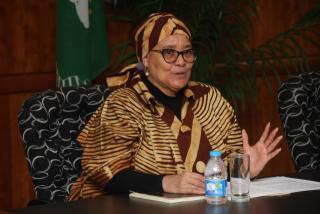
GOBABIS, 05 June 2026 - Vice President Lucia Witbooi delivers her keynote address at the graduation ceremony of 670 cadet constables at Gobabis’ Legare Sports Complex. (Photo: Contributed)

GOBABIS, 05 June 2026 - Vice President Lucia Witbooi delivers her keynote address at the graduation ceremony of 670 cadet constables at Gobabis’ Legare Sports Complex. (Photo: Contributed)

NAMPA
Comprehensive Compelling Credible Content
#14
Namibian Regions
#23
Journalists
#16
SADC Countries
#123 000
Monthly Website Users
Top News Site
In Southern Africa
#10
Partner Agencies Across the globe

International News Photos

Microscopist Amrstrong Mgiba (L) waits for his colleague Nicholas Skhumbane (CL) to prepare blood smear slides before analysing them under a microscope at the Cunningmore Clinic in Bushbuckridge on May 26, 2026. Human-induced climate change, compounded by the La Nina weather pattern, has intensified extreme rainfall across southern Africa, the National Institute for Communicable Diseases (NICD) said, creating conditions that can fuel malaria transmission long after floodwaters recede.
In Mpumalanga, cases rose fourfold in January compared with a year earlier, jeopardising South Africa's goal of eliminating malaria by 2029. (Photo by EMMANUEL CROSET / AFP)

Microscopist Amrstrong Mgiba (L) waits for his colleague Nicholas Skhumbane (CL) to prepare blood smear slides before analysing them under a microscope at the Cunningmore Clinic in Bushbuckridge on May 26, 2026. Human-induced climate change, compounded by the La Nina weather pattern, has intensified extreme rainfall across southern Africa, the National Institute for Communicable Diseases (NICD) said, creating conditions that can fuel malaria transmission long after floodwaters recede. In Mpumalanga, cases rose fourfold in January compared with a year earlier, jeopardising South Africa's goal of eliminating malaria by 2029. (Photo by EMMANUEL CROSET / AFP)

NAMPA / AFP
Microscopist Amrstrong Mgiba looks through a microscope as he analyses a blood sample for Malaria at the Cunningmore Clinic in Bushbuckridge on May 26, 2026. Human-induced climate change, compounded by the La Nina weather pattern, has intensified extreme rainfall across southern Africa, the National Institute for Communicable Diseases (NICD) said, creating conditions that can fuel malaria transmission long after floodwaters recede.
In Mpumalanga, cases rose fourfold in January compared with a year earlier, jeopardising South Africa's goal of eliminating malaria by 2029. (Photo by EMMANUEL CROSET / AFP)

Microscopist Amrstrong Mgiba looks through a microscope as he analyses a blood sample for Malaria at the Cunningmore Clinic in Bushbuckridge on May 26, 2026. Human-induced climate change, compounded by the La Nina weather pattern, has intensified extreme rainfall across southern Africa, the National Institute for Communicable Diseases (NICD) said, creating conditions that can fuel malaria transmission long after floodwaters recede. In Mpumalanga, cases rose fourfold in January compared with a year earlier, jeopardising South Africa's goal of eliminating malaria by 2029. (Photo by EMMANUEL CROSET / AFP)

NAMPA / AFP
A malaria-positive blood smear is seen through a microscope in the National Health Laboratory at Tintswalo Hospital in Bushbuckridge on May 26, 2026. Human-induced climate change, compounded by the La Nina weather pattern, has intensified extreme rainfall across southern Africa, the National Institute for Communicable Diseases (NICD) said, creating conditions that can fuel malaria transmission long after floodwaters recede.
In Mpumalanga, cases rose fourfold in January compared with a year earlier, jeopardising South Africa's goal of eliminating malaria by 2029. (Photo by EMMANUEL CROSET / AFP)

A malaria-positive blood smear is seen through a microscope in the National Health Laboratory at Tintswalo Hospital in Bushbuckridge on May 26, 2026. Human-induced climate change, compounded by the La Nina weather pattern, has intensified extreme rainfall across southern Africa, the National Institute for Communicable Diseases (NICD) said, creating conditions that can fuel malaria transmission long after floodwaters recede. In Mpumalanga, cases rose fourfold in January compared with a year earlier, jeopardising South Africa's goal of eliminating malaria by 2029. (Photo by EMMANUEL CROSET / AFP)

NAMPA / AFP
Microscopist Amrstrong Mgiba (L) looks through a microscope as he analyses a blood sample for Malaria next to his colleague Nicholas Skhumbane (R) preparing blood smear slides at the Cunningmore Clinic in Bushbuckridge on May 26, 2026. Human-induced climate change, compounded by the La Nina weather pattern, has intensified extreme rainfall across southern Africa, the National Institute for Communicable Diseases (NICD) said, creating conditions that can fuel malaria transmission long after floodwaters recede.
In Mpumalanga, cases rose fourfold in January compared with a year earlier, jeopardising South Africa's goal of eliminating malaria by 2029. (Photo by EMMANUEL CROSET / AFP)

Microscopist Amrstrong Mgiba (L) looks through a microscope as he analyses a blood sample for Malaria next to his colleague Nicholas Skhumbane (R) preparing blood smear slides at the Cunningmore Clinic in Bushbuckridge on May 26, 2026. Human-induced climate change, compounded by the La Nina weather pattern, has intensified extreme rainfall across southern Africa, the National Institute for Communicable Diseases (NICD) said, creating conditions that can fuel malaria transmission long after floodwaters recede. In Mpumalanga, cases rose fourfold in January compared with a year earlier, jeopardising South Africa's goal of eliminating malaria by 2029. (Photo by EMMANUEL CROSET / AFP)

NAMPA / AFP
Microscopist Amrstrong Mgiba (L) looks through a microscope as he analyses a blood sample for Malaria next to his colleague Nicholas Skhumbane (R) preparing blood smear slides at the Cunningmore Clinic in Bushbuckridge on May 26, 2026. Human-induced climate change, compounded by the La Nina weather pattern, has intensified extreme rainfall across southern Africa, the National Institute for Communicable Diseases (NICD) said, creating conditions that can fuel malaria transmission long after floodwaters recede.
In Mpumalanga, cases rose fourfold in January compared with a year earlier, jeopardising South Africa's goal of eliminating malaria by 2029. (Photo by EMMANUEL CROSET / AFP)

Microscopist Amrstrong Mgiba (L) looks through a microscope as he analyses a blood sample for Malaria next to his colleague Nicholas Skhumbane (R) preparing blood smear slides at the Cunningmore Clinic in Bushbuckridge on May 26, 2026. Human-induced climate change, compounded by the La Nina weather pattern, has intensified extreme rainfall across southern Africa, the National Institute for Communicable Diseases (NICD) said, creating conditions that can fuel malaria transmission long after floodwaters recede. In Mpumalanga, cases rose fourfold in January compared with a year earlier, jeopardising South Africa's goal of eliminating malaria by 2029. (Photo by EMMANUEL CROSET / AFP)

NAMPA / AFP
A malaria-positive blood smear is seen through a microscope in the National Health Laboratory at Tintswalo Hospital in Bushbuckridge on May 26, 2026. Human-induced climate change, compounded by the La Nina weather pattern, has intensified extreme rainfall across southern Africa, the National Institute for Communicable Diseases (NICD) said, creating conditions that can fuel malaria transmission long after floodwaters recede.
In Mpumalanga, cases rose fourfold in January compared with a year earlier, jeopardising South Africa's goal of eliminating malaria by 2029. (Photo by EMMANUEL CROSET / AFP)

A malaria-positive blood smear is seen through a microscope in the National Health Laboratory at Tintswalo Hospital in Bushbuckridge on May 26, 2026. Human-induced climate change, compounded by the La Nina weather pattern, has intensified extreme rainfall across southern Africa, the National Institute for Communicable Diseases (NICD) said, creating conditions that can fuel malaria transmission long after floodwaters recede. In Mpumalanga, cases rose fourfold in January compared with a year earlier, jeopardising South Africa's goal of eliminating malaria by 2029. (Photo by EMMANUEL CROSET / AFP)

NAMPA / AFP
A malaria-positive blood smear is seen through a microscope in the National Health Laboratory at Tintswalo Hospital in Bushbuckridge on May 26, 2026. Human-induced climate change, compounded by the La Nina weather pattern, has intensified extreme rainfall across southern Africa, the National Institute for Communicable Diseases (NICD) said, creating conditions that can fuel malaria transmission long after floodwaters recede.
In Mpumalanga, cases rose fourfold in January compared with a year earlier, jeopardising South Africa's goal of eliminating malaria by 2029. (Photo by EMMANUEL CROSET / AFP)

A malaria-positive blood smear is seen through a microscope in the National Health Laboratory at Tintswalo Hospital in Bushbuckridge on May 26, 2026. Human-induced climate change, compounded by the La Nina weather pattern, has intensified extreme rainfall across southern Africa, the National Institute for Communicable Diseases (NICD) said, creating conditions that can fuel malaria transmission long after floodwaters recede. In Mpumalanga, cases rose fourfold in January compared with a year earlier, jeopardising South Africa's goal of eliminating malaria by 2029. (Photo by EMMANUEL CROSET / AFP)

NAMPA / AFP
Medical technologist and laboratory manager at the National Health Laboratory Service Rirhandzu Mashale points to blood smear slide before having it examined for malaria at Tintswalo Hospital in Bushbuckridge on May 26, 2026. Human-induced climate change, compounded by the La Nina weather pattern, has intensified extreme rainfall across southern Africa, the National Institute for Communicable Diseases (NICD) said, creating conditions that can fuel malaria transmission long after floodwaters recede.
In Mpumalanga, cases rose fourfold in January compared with a year earlier, jeopardising South Africa's goal of eliminating malaria by 2029. (Photo by EMMANUEL CROSET / AFP)

Medical technologist and laboratory manager at the National Health Laboratory Service Rirhandzu Mashale points to blood smear slide before having it examined for malaria at Tintswalo Hospital in Bushbuckridge on May 26, 2026. Human-induced climate change, compounded by the La Nina weather pattern, has intensified extreme rainfall across southern Africa, the National Institute for Communicable Diseases (NICD) said, creating conditions that can fuel malaria transmission long after floodwaters recede. In Mpumalanga, cases rose fourfold in January compared with a year earlier, jeopardising South Africa's goal of eliminating malaria by 2029. (Photo by EMMANUEL CROSET / AFP)

NAMPA / AFP