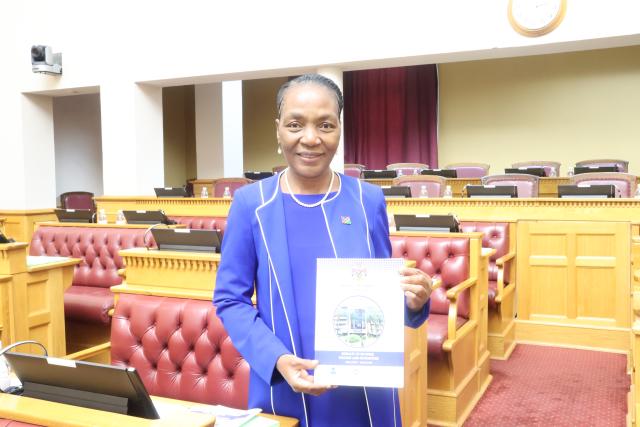
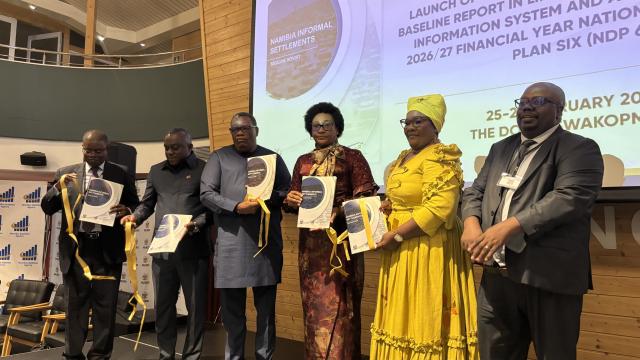
WINDHOEK, 05 FEB (NAMPA)- Minister of Labour Relations and Justice, Fillemon Wise Immanuel at the 2026 Legal year opening. (Photo by Eba Kandovazu). NAMPA
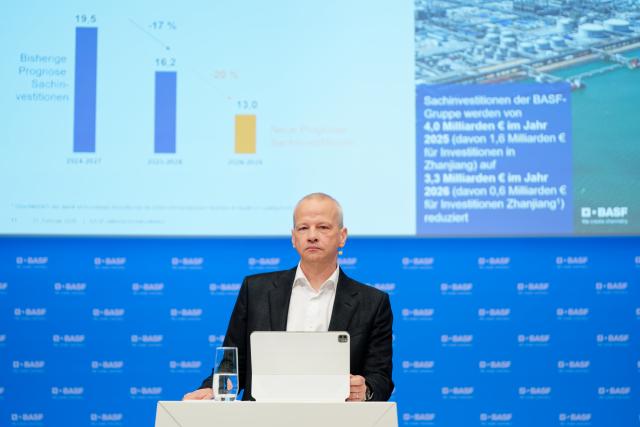
WINDHOEK, O5 FEBRUARY 2026 - Chief Executive Officer of the Namibia Chamber of Commerce and Industry (NCCI), Titus Nampala. (Photo by: Chelva Wells) NAMPA
WINDHOEK, 05 February 2026- President Netumbo Nandi-Ndaitwah during the opening of the 2026 Legal year. (Photo by Eba Kandovazu). NAMPA
WINDHOEK, 05 FEBRUARY 2026 - Chief of the Subregional Initiative Section at Economic Commission for Africa (ECA) subregional office for Southern Africa (SRO-SA), Zodwa Mabuza. (Photo by: Chelva Wells) NAMPA
WINDHOEK, 05 February 2026 - Attendees pictured during a cervical cancer awareness dialogue in Windhoek. (Photo by: Mathilde Kudumo) NAMPA
WINDHOEK, 05 February 2026 - President Netumbo Nandi-Ndaitwah pictured with Chief Justice Peter Shivute and judicial officers. (Photo by: Eba Kandovazu) NAMPA
WINDHOEK, 04 February 2026 - Minister of Industries, Mines and Energy, Modestus Amutse. (Photo by: Andreas Thomas) NAMPA
KATIMA MULILO, 05 February 2026 - Katima Mulilo Police Station Commander, Chief Inspector Charles Mayumbelo pictured during a media conference on Thursday. (Photo: Michael Mutonga Liswaniso) NAMPA
(260211) -- DONGXING, Feb. 11, 2026 (Xinhua) -- Su Haizhen checks the traditional attire which is worn when playing the Duxianqin in Dongxing City, south China's Guangxi Zhuang Autonomous Region, Feb. 7, 2026. On Jintan Beach in Dongxing City of south China's Guangxi Zhuang Autonomous Region, Su Haizhen plays the Duxianqin, or single-stringed musical instrument, showcasing the unique charm of the Jing ethnic group's special instrument. The Jing people are among China's smaller ethnic minority groups, and the only one whose economy is primarily based on marine fishing. They mainly reside in Dongxing City of Guangxi. Duxianqin is a distinctive ethnic instrument of Dongxing's Jing community. With just one string and one lever, it can produce six registers and three octaves. In 2011, the Duxianqin art of Jing people was listed as one of the national intangible cultural heritages in China. Su Haizhen, a Jing native from Dongxing who grew up by the sea, comes from a family that has been dedicated to preserving Jing culture since her grandfather's generation. In 1987, she began formally studying to play the Duxianqin. Today, she is a regional-level representative inheritor of the Duxianqin art of Jing people in the autonomous region. Over nearly four decades of research, inheriting, and development of the instrument, Su has been continuously refining her playing skills while improving the instrument's craftsmanship and exploring innovative performance styles. She is also committed to nurturing more enthusiasts and inheritors of the art. In 2023, after becoming a member of the National Committee of the Chinese People's Political Consultative Conference, Su Haizhen felt a stronger sense of mission and responsibility to preserve and promote China's traditional culture. While advocating for Duxianqin education in schools, she has been exploring ways to further highlight the cultural appeal of the art. Leveraging Dongxing's geographical proximity to Vietnam, she aims to foster deeper cultural exchanges and cooperation between China and ASEAN countries like Vietnam. (Xinhua/Lu Boan)
(260211) -- DONGXING, Feb. 11, 2026 (Xinhua) -- Su Haizhen (1st R) asks for tourists' advice on the development of tourism near the Dongxing Port in Dongxing City, south China's Guangxi Zhuang Autonomous Region, Feb. 7, 2026. On Jintan Beach in Dongxing City of south China's Guangxi Zhuang Autonomous Region, Su Haizhen plays the Duxianqin, or single-stringed musical instrument, showcasing the unique charm of the Jing ethnic group's special instrument. The Jing people are among China's smaller ethnic minority groups, and the only one whose economy is primarily based on marine fishing. They mainly reside in Dongxing City of Guangxi. Duxianqin is a distinctive ethnic instrument of Dongxing's Jing community. With just one string and one lever, it can produce six registers and three octaves. In 2011, the Duxianqin art of Jing people was listed as one of the national intangible cultural heritages in China. Su Haizhen, a Jing native from Dongxing who grew up by the sea, comes from a family that has been dedicated to preserving Jing culture since her grandfather's generation. In 1987, she began formally studying to play the Duxianqin. Today, she is a regional-level representative inheritor of the Duxianqin art of Jing people in the autonomous region. Over nearly four decades of research, inheriting, and development of the instrument, Su has been continuously refining her playing skills while improving the instrument's craftsmanship and exploring innovative performance styles. She is also committed to nurturing more enthusiasts and inheritors of the art. In 2023, after becoming a member of the National Committee of the Chinese People's Political Consultative Conference, Su Haizhen felt a stronger sense of mission and responsibility to preserve and promote China's traditional culture. While advocating for Duxianqin education in schools, she has been exploring ways to further highlight the cultural appeal of the art. Leveraging Dongxing's geographical proximity to Vietnam, she aims to foster deeper cultural exchanges and cooperation between China and ASEAN countries like Vietnam. (Xinhua/Lu Boan)
(260211) -- DONGXING, Feb. 11, 2026 (Xinhua) -- Su Haizhen plays the Duxianqin on Jintan Beach in Dongxing City, south China's Guangxi Zhuang Autonomous Region, Feb. 7, 2026. On Jintan Beach in Dongxing City of south China's Guangxi Zhuang Autonomous Region, Su Haizhen plays the Duxianqin, or single-stringed musical instrument, showcasing the unique charm of the Jing ethnic group's special instrument. The Jing people are among China's smaller ethnic minority groups, and the only one whose economy is primarily based on marine fishing. They mainly reside in Dongxing City of Guangxi. Duxianqin is a distinctive ethnic instrument of Dongxing's Jing community. With just one string and one lever, it can produce six registers and three octaves. In 2011, the Duxianqin art of Jing people was listed as one of the national intangible cultural heritages in China. Su Haizhen, a Jing native from Dongxing who grew up by the sea, comes from a family that has been dedicated to preserving Jing culture since her grandfather's generation. In 1987, she began formally studying to play the Duxianqin. Today, she is a regional-level representative inheritor of the Duxianqin art of Jing people in the autonomous region. Over nearly four decades of research, inheriting, and development of the instrument, Su has been continuously refining her playing skills while improving the instrument's craftsmanship and exploring innovative performance styles. She is also committed to nurturing more enthusiasts and inheritors of the art. In 2023, after becoming a member of the National Committee of the Chinese People's Political Consultative Conference, Su Haizhen felt a stronger sense of mission and responsibility to preserve and promote China's traditional culture. While advocating for Duxianqin education in schools, she has been exploring ways to further highlight the cultural appeal of the art. Leveraging Dongxing's geographical proximity to Vietnam, she aims to foster deeper cultural exchanges and cooperation between China and ASEAN countries like Vietnam. (Xinhua/Lu Boan)
(260211) -- DONGXING, Feb. 11, 2026 (Xinhua) -- Su Haizhen guides a student in playing the Duxianqin at an inheriting center in Dongxing City, south China's Guangxi Zhuang Autonomous Region, Feb. 6, 2026. On Jintan Beach in Dongxing City of south China's Guangxi Zhuang Autonomous Region, Su Haizhen plays the Duxianqin, or single-stringed musical instrument, showcasing the unique charm of the Jing ethnic group's special instrument. The Jing people are among China's smaller ethnic minority groups, and the only one whose economy is primarily based on marine fishing. They mainly reside in Dongxing City of Guangxi. Duxianqin is a distinctive ethnic instrument of Dongxing's Jing community. With just one string and one lever, it can produce six registers and three octaves. In 2011, the Duxianqin art of Jing people was listed as one of the national intangible cultural heritages in China. Su Haizhen, a Jing native from Dongxing who grew up by the sea, comes from a family that has been dedicated to preserving Jing culture since her grandfather's generation. In 1987, she began formally studying to play the Duxianqin. Today, she is a regional-level representative inheritor of the Duxianqin art of Jing people in the autonomous region. Over nearly four decades of research, inheriting, and development of the instrument, Su has been continuously refining her playing skills while improving the instrument's craftsmanship and exploring innovative performance styles. She is also committed to nurturing more enthusiasts and inheritors of the art. In 2023, after becoming a member of the National Committee of the Chinese People's Political Consultative Conference, Su Haizhen felt a stronger sense of mission and responsibility to preserve and promote China's traditional culture. While advocating for Duxianqin education in schools, she has been exploring ways to further highlight the cultural appeal of the art. Leveraging Dongxing's geographical proximity to Vietnam, she aims to foster deeper cultural exchanges and cooperation between China and ASEAN countries like Vietnam. (Xinhua/Lu Boan)
(260211) -- DONGXING, Feb. 11, 2026 (Xinhua) -- Su Haizhen asks for local residents' advice on tourism and cultural development with cellphone near the Dongxing Port in Dongxing City, south China's Guangxi Zhuang Autonomous Region, Feb. 7, 2026. On Jintan Beach in Dongxing City of south China's Guangxi Zhuang Autonomous Region, Su Haizhen plays the Duxianqin, or single-stringed musical instrument, showcasing the unique charm of the Jing ethnic group's special instrument. The Jing people are among China's smaller ethnic minority groups, and the only one whose economy is primarily based on marine fishing. They mainly reside in Dongxing City of Guangxi. Duxianqin is a distinctive ethnic instrument of Dongxing's Jing community. With just one string and one lever, it can produce six registers and three octaves. In 2011, the Duxianqin art of Jing people was listed as one of the national intangible cultural heritages in China. Su Haizhen, a Jing native from Dongxing who grew up by the sea, comes from a family that has been dedicated to preserving Jing culture since her grandfather's generation. In 1987, she began formally studying to play the Duxianqin. Today, she is a regional-level representative inheritor of the Duxianqin art of Jing people in the autonomous region. Over nearly four decades of research, inheriting, and development of the instrument, Su has been continuously refining her playing skills while improving the instrument's craftsmanship and exploring innovative performance styles. She is also committed to nurturing more enthusiasts and inheritors of the art. In 2023, after becoming a member of the National Committee of the Chinese People's Political Consultative Conference, Su Haizhen felt a stronger sense of mission and responsibility to preserve and promote China's traditional culture. While advocating for Duxianqin education in schools, she has been exploring ways to further highlight the cultural appeal of the art. Leveraging Dongxing's geographical proximity to Vietnam, she aims to foster deeper cultural exchanges and cooperation between China and ASEAN countries like Vietnam. (Xinhua/Lu Boan)
(260211) -- DONGXING, Feb. 11, 2026 (Xinhua) -- Su Haizhen plays the Duxianqin on Jintan Beach in Dongxing City, south China's Guangxi Zhuang Autonomous Region, Feb. 7, 2026. On Jintan Beach in Dongxing City of south China's Guangxi Zhuang Autonomous Region, Su Haizhen plays the Duxianqin, or single-stringed musical instrument, showcasing the unique charm of the Jing ethnic group's special instrument. The Jing people are among China's smaller ethnic minority groups, and the only one whose economy is primarily based on marine fishing. They mainly reside in Dongxing City of Guangxi. Duxianqin is a distinctive ethnic instrument of Dongxing's Jing community. With just one string and one lever, it can produce six registers and three octaves. In 2011, the Duxianqin art of Jing people was listed as one of the national intangible cultural heritages in China. Su Haizhen, a Jing native from Dongxing who grew up by the sea, comes from a family that has been dedicated to preserving Jing culture since her grandfather's generation. In 1987, she began formally studying to play the Duxianqin. Today, she is a regional-level representative inheritor of the Duxianqin art of Jing people in the autonomous region. Over nearly four decades of research, inheriting, and development of the instrument, Su has been continuously refining her playing skills while improving the instrument's craftsmanship and exploring innovative performance styles. She is also committed to nurturing more enthusiasts and inheritors of the art. In 2023, after becoming a member of the National Committee of the Chinese People's Political Consultative Conference, Su Haizhen felt a stronger sense of mission and responsibility to preserve and promote China's traditional culture. While advocating for Duxianqin education in schools, she has been exploring ways to further highlight the cultural appeal of the art. Leveraging Dongxing's geographical proximity to Vietnam, she aims to foster deeper cultural exchanges and cooperation between China and ASEAN countries like Vietnam. (Xinhua/Lu Boan)
(260211) -- DONGXING, Feb. 11, 2026 (Xinhua) -- Su Haizhen introduces Duxianqin to audience via live-streaming in Dongxing City, south China's Guangxi Zhuang Autonomous Region, Feb. 7, 2026. On Jintan Beach in Dongxing City of south China's Guangxi Zhuang Autonomous Region, Su Haizhen plays the Duxianqin, or single-stringed musical instrument, showcasing the unique charm of the Jing ethnic group's special instrument. The Jing people are among China's smaller ethnic minority groups, and the only one whose economy is primarily based on marine fishing. They mainly reside in Dongxing City of Guangxi. Duxianqin is a distinctive ethnic instrument of Dongxing's Jing community. With just one string and one lever, it can produce six registers and three octaves. In 2011, the Duxianqin art of Jing people was listed as one of the national intangible cultural heritages in China. Su Haizhen, a Jing native from Dongxing who grew up by the sea, comes from a family that has been dedicated to preserving Jing culture since her grandfather's generation. In 1987, she began formally studying to play the Duxianqin. Today, she is a regional-level representative inheritor of the Duxianqin art of Jing people in the autonomous region. Over nearly four decades of research, inheriting, and development of the instrument, Su has been continuously refining her playing skills while improving the instrument's craftsmanship and exploring innovative performance styles. She is also committed to nurturing more enthusiasts and inheritors of the art. In 2023, after becoming a member of the National Committee of the Chinese People's Political Consultative Conference, Su Haizhen felt a stronger sense of mission and responsibility to preserve and promote China's traditional culture. While advocating for Duxianqin education in schools, she has been exploring ways to further highlight the cultural appeal of the art. Leveraging Dongxing's geographical proximity to Vietnam, she aims to foster deeper cultural exchanges and cooperation between China and ASEAN countries like Vietnam. (Xinhua/Lu Boan)